
A Tribute to Neil Muncy
1938 – 2012
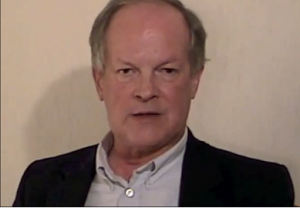
Neil Muncy, Audio Engineer
1938 – 2012
Neil Muncy, was a friend, colleague, teacher, and mentor to several generations of audio practitioners. He died peacefully on Friday, August 10, 2012 at York Central Hospital in Toronto in his 74th year after a long illness.
An AES Life Fellow Member and Lifetime Achievement Award Recipient, teacher at Eastman School of Music Summer Advanced Recording Institute, and studio guru, Neil’s love of jazz drew him to a life of getting the best sound out of the audio technology of the time.
As a one-time chair, and organizer of and participant in many section events, Neil was a huge friend of the Toronto AES.
He will be missed.
Neil Muncy: A Tribute Evening
On December 18, 2012, the Toronto AES presented a tribute evening to the memory of Neil Muncy. It was an opportunity for those who knew him as a friend, who worked with him as a colleague, to share their thoughts and memories. Thanks to all who contributed written or podcast submissions expressed how Neil influenced their lives.
Neil Muncy: Stories
On May 18, 2010, Alan Hardiman chatted with Neil Muncy about all things Neil, as a dry-run for a pilot they intended to pitch to a local jazz radio station: this did not get finished before Neil passed away. Following are a few choice stories from that session about Count Basie, Samy Davis Jr., Phil Ramone, Ed Greene, Stan Getz, and others who Neil worked with throughout his career.
Recorded by Alan Hardiman, Post-production by Earl McCluskie. Copyright 2012 Audio Engineering Society, Toronto Section.
TRIBUTE WALL
Don’t know how many of you have had personal contact with Neil through his years in Toronto, but he certainly has made his mark in audio. The most substantial by far, I’ve recently come to realize (again and again) is that no matter where I am and plug in a number of pieces of audio gear, link them together with whatever is lying around and power it up and crank the volume…………..NO HUM……..
We have Neil and Bill Whitlock to thank for that. For their relentless work and pontification that manufacturers “do it right” with respect grounding and balancing. These days even unbalanced gear works…
This should and will help keep Neil living on in our memory, certainly will in mine.
Neil passed away this evening shortly after 8PM peacefully with a smile on his face. Mary Muncy asked me to thank everyone for their thoughts, prayers, and phone calls of support. She welcomes the opportunity to talk with any of Neil’s friends.
She did mention today how proud and happy Neil was upon receiving the signed get well card and photograph from AES Toronto Section in June. We can find some small comfort in the fact that he is no longer suffering.
I was glad to speak with Mary for a while yesterday afternoon, a few hours before Neil passed, and say a few final words to Neil.
Neil gave me the courage to just do my job, even though I didn’t have any letters behind my name like the rest of my colleagues did. He encouraged me to ask the stupid, obvious questions anyway, and had a way of explaining things in a way that didn’t come off as pompous or condescending (something so many teachers could learn from).
We became fast friends, and little did I know that the writings I ‘polished up’ as favours to Neil, like the articles he wrote for Professional Sound magazine, would become one of the most popular papers presented by the AES. No, I don’t have a degree in anything, but I had Neil as a teacher, who helped me with everything from learning how to write and navigate patent applications, Technical, and Engineer specs to raising heirloom veggies to coping with chronic pain.
He was there at my wedding, and my husband John and I used to visit Neil quite often when we lived in Ballantrae and then Wilfrid, as we travelled through Markham en route to the city. John did some framing/wiring in Neil’s basement to facilitate his teaching classes from home and built the ramp he used to get into his car.
We spent a lot of evenings at Neil’s with our daughter Deirdre and Sneakers the cat, watching stuff like ‘True Lies’ on his Surround Sound system with SpiderVision hooked up. Good food, wine and great stories and conversation from Neil. I wish that I’d had more opportunity to see him in recent years since our latest move, but I can tell you that teaching was always Neil’s passion, and he was the best there was in this industry. I am blessed to have known him and to have had him as a mentor and friend. I wouldn’t know half of you as well as I do if it wasn’t for Neil.
Shortly after Neil passed, my area experienced a ferocious lightning storm, which I watched in darkness off my front porch, and I knew that Neil was already at work on the sound system up there.
See you later, Scooter. Your friends will never forget how wonderful you were.
I knew Neil for about 13 years. The quotes I remember best are:
Whenever Neil was asked how he was doing, the answer was always “Within 3dB!” The answer was predicable but still funny no matter how many times I heard it.
I shall also never forget other gems of Neil’s wit such as: “As busy as a one-legged man in an ass-kicking contest” or “As nervous as a long-tailed cat in a room full of rocking chairs”. Great visuals!
There was also the one about crossing Gingko with Viagra but I don’t think you want the answer to that on your web site!
I learnt so much from Neil, and it was an honor to have known him. RIP Neil.
Neil was my friend.
He used to come hang out at my shop in the early 80s (Straight Wire Audio, Arlington VA) and loved to teach this inexperienced kid how things really worked.
The Neil quote I love best was his response to a question I had about a bogus spec sheet. It stated an EIN of 135 dB @ 150 ohms or some other impossible number. I innocently asked Neil what instrument he thought they used to get such a low noise measurement.
He simply said “A typewriter!”
RIP Neil; my teacher and life long friend.
I first met Neil in 1994 when he was speaking at a local AES event in Los Angeles. He seemed to identify me right away as one who shared his passion and he quickly persuaded me, in spite of my intense fear of public speaking, to “get out there and tell those folks what you know about balanced interfaces”. In retrospect, he was one of the most influential people in my life since he essentially kick-started my writing and lecturing about interfaces. We had many lively discussions about the associated topics that spurred both of us to dig deeper and deeper.
He was always kind, generous, and respectful, even when we disagreed. I have so much to thank him for. I’m grateful to have spent several days in his home in November 2011, enjoying conversation, movies, and a party where I served as his robotic hands in the kitchen. He was a fine, warmhearted man that I’ll always miss.
Many thanks and warm regards,
I was designing audio wiring for a large new broadcast centre when Neil’s landmark AES Journal article about the “pin 1 problem” (re grounds on XLR connectors) was the talk of the audio industry. It had a large influence on the eventual system design.
I called Neil on a number of acoustical and audio electronics issues over the years, and he was always extremely generous in giving as much time as was needed to make sure you understood him.
Neil was very passionate about broadcast audio quality. He gave me quite an education on TV audio problems, which enabled me to successfully retune the sound of an educational broadcaster, and also to make a long-term practice of landing very hard on cable companies for audio problems, as he did often and for many years. My wife was a big fan of Neil (who was a gracious host to the Toronto audio community), but had some reservations when I followed his lead and installed a pile of audio test equipment next to the TV set. My wife, who thought his house looked a lot like ours in this respect, remembers him as “an old-fashioned gentleman with an active, inquiring mind that never turned off”.
Neil walked me through an electronic assisted acoustics system which he engineered for a significant but problematic concert hall for an article I was writing. Not only did he take me down to the most microscopic elements of the system, he was strikingly modest, as always, about his rather noteworthy achievement. I had known Neil for a number of years before I knew about most of the things he had done in his career.
I will miss him, as will we all.
I am adding our mutual friend and colleague, Paul Blakemore to this thread, because he may be able to add more detail about the period of Neil’s life that you’re researching.
What I can tell you is that he was involved in summer recording institutes at Eastman School of Music for a number of years c. late 70s (which is where I first met him), organized by Ros Ritchie, with a cast of other visiting audio industry luminaries (e.g., Ed Greene, Val Valentin, Don Puluse, Mel Sprinkle). At that time he was based in the Washington, DC area.
When we organized the NPR Music Recording Workshops (late 70s through mid 80s), we hired Neil as our go-to guy for the under-the-hood tech classes (and a lot of system design for our presentation/demo tech). Paul, the late Curt Wittig, and I were the other workshop regulars, with a rotating cast of others including Ken Pohlmann, Dave Moulton, Dave Glasser, Shawn Murphy, and the late Roy Pritts.
I know he had a business that built small custom recording consoles (and other gear) of very high audio quality for a number of recordists at this time. He also developed some unique stereo audio monitoring systems during this period.
Finally, I have a vague recollection that he was engaged by the Library of Congress to do some work for their audio archive department around this time.
Visiting Neil at home was always an interesting experience. Invariably you’d go home well fed, enlightened on some technical detail – and when the season was right with a basketful of fresh tomatoes and basil.
Following the meals we would often adjourn to the home theatre, called the “fun room” in Neil-speak and either listen to some tunes or watch some TV. For someone who’s artistic sensibilities ran heavily to Jazz Neil had a fondness for NASCAR that was a bit out of character. I watched a few races with him and he always had some insight into the effects that were added to the image or some other detail of the production. He didn’t make a big deal of the fact that he had consulted to NASCAR, he just enjoyed the fun.
His ability to coin amusing expressions that would not have sounded out place in a Milton Berle monologue was legendary. My favourite was his description of the ready-made gazebo he had in his yard as a “ga-cheapo”.
When he became confined to a wheelchair I built a plywood ramp so he could come over to my place for a meal or celebration. He was here for Christmas one year and attended a couple of parties too. That ramp was designed to perform double duty, I built it with folding legs attached so it could double as a long table. I still have it in the garage set up as a work table.
It was sometime in the mid 1990s. I had this big project out in Victoria, B.C. We had an acoustic scale model built for the renovation of the Royal Theatre. It took up the space of an entire office, here in Toronto. The conductor, the architect and some members of the board of directors were due on Monday morning to review what we had done. The pressure was on. But I was alone in the office on a Saturday afternoon and couldn’t get anything to work. The 15,000 V spark source crashed my computer every time I snapped a spark. I called Neil, he invited me up to his house and, although even then, he was having trouble moving around, he saved my bacon.
Saved my bacon big time.
Neil, the guru of grounding, put together an aluminium foil shield around our pre-amp that gave us 10 dB (or more) isolation from the spark source EMI. With that I was able to move forward and by Monday everything was fine.
Neil was a kind, intelligent and gentle man. He was always good to me.
I shall never forget him.
Neil and I met in Washington in ’61 when we both were just getting started “in the business.” We would go to a bar on Wisconsin Avenue named
the Zebra Room and order separate pitchers of beer.
Among his many accomplishments was to build the console for studio A2 at A & R (he built a second console for studio R2), The first official
session in that studio included the Guess Who’s “These Eyes.”
I could go on but to me he was unquestionably the best systems man in the business. A lovable curmudgeon, he is greatly missed.
I don’t have much on my plate to remember Neil by, but I do remember very much his glowing endorsement of the surge protector that could tame even horrific input transients, and suffer absolutely no degradation. He was involved in its development, possibly its principal designer.
Some years ago I set the parts aside to make one of these, and especially the inductor is quite challenging to make. The parts just sat there for some years and inevitably were forgotten until recently
when I decided to finish the project, about a month before Neil died.
I have found the parts and it is now something I must finish, partly as a tribute to him.
I shook hands with Neil Muncy at the first Toronto AES section’s Overview in 1986.
Based on that encounter, I cheekily used his name as a reference on a job application for a teaching position, and the university called Neil.
He then called me, and said that we needed to do lunch… he drove to where I was working, we had lunch, and he recommended me for the job. He became my life-long mentor and friend.
That’s the kind of guy Neil was.
I have a few stories I will leave until I can share them at the Tribute (now I remember why tequila is my preferred drink, when I do, which is not very often.) One was a night I was at his house with my husband and our daughter. Neil was working with Modulation Sciences, and had been showing SpiderVision to anyone he could drag into the ‘fun room’.
That evening, John was doing some framing in the basement. Neil and I were upstairs, I was crocheting on the couch, he was watching sports and my daughter was having a tantrum and wanted to watch cartoons. Neil found a compliant station running cartoons (kinda funny, because we’d been discussing how few there were over dinner…i guess this was in late 05-06).
He then proceeded to hook up SpiderVision and basically did a whole presentation…to my 6 year old…with cartoons in the background as an example. I fell asleep on his couch that night, Deirdre on the floor with Sneakers. The men were up yacking half the night, and my husband (John ‘Skully’ McIntosh, bass tech for Geddy Lee of Rush) learned a lot from Neil that has helped him as an amp and guitar tech.
I also remember Neil noticing me flirting once when he was presenting a paper at the AES San Fran Convention back in 91/92? (hey, I took my opportunities where they came) Being the coy, don’t-miss-a-trick guy he was, I wound up somehow steered into a social situation that evening which included Neil….and the guy I was sharing go-go eyes with…and we ended up dating briefly until life took him across the border, off the continent and out of my clutches. haha. Neil was at my wedding, and shortly afterwards, when John was going over there a lot with me and helping him in the basement, Neil said something to me like, “I always thought you and Paul would have been an excellent match, but I think you and John were made for each other. I really like that guy”. That meant a lot to me. Bizarrely, I met John through Martin Van Dijk, who I met through Neil and Dave Clark.
Neil was also the one who encouraged me (and was my reference) when I applied at Adamson. I wasn’t going to because of the history Brock and I had (I punched him in a bar during an EAW party one year – others can tell *that* story). But Neil was like, “So what? You think the guys don’t have situations like that? I’ve pissed off thousands of people. I wouldn’t let that stop me.”
(You can use those I guess, for the tribute, or send this reply on to anyone (Neil’s friends who might get a kick out of those stories) wondering about my times and 20+ year friendship with Neil).
thanks for this opportunity.
I saw Neil several times over the past few months, most recently with Phil Giddings at Neil’s home in Markham. It was apparent that he was in great distress from the pain in his leg, and it was frustrating that we couldn’t do anything for him in that regard, except to urge his personal care workers to call in competent medical attention for him.
Shortly after that, he left me a voice mail, starting by stating the time and date of his call. Uncertain of the date, he said–in typical Neil fashion–“Today is whatever tomorrow was yesterday.”
That’s how I will remember him, witty and sharp to the end. That, and his recommendation on how best to deal with the Pin-1 issue in my mic preamp.
Neil and I were planning the pilot of a talk and music show to pitch to Jazz-FM, based on his experiences as a fly on the wall during a number of classic recording sessions in the 1960s. In order to block out the script, we worked through some mock interviews in his audio room, in which Neil held forth on the goings on in the studio with various artists, including (if I remember correctly) Stan Getz and Sammy Davis Jr.
While far from studio quality, the audio recordings of those interviews contain some priceless “Neil moments.” The show may not go on, but it’s fitting that the technology that he worked so hard to perfect will ensure that Neil’s voice will continue to be heard: I’ll post that material online when I get back to Toronto, and will copy the link to everyone on this list.
I sure will miss him. Neil Muncy–one of a kind. Plus or minus 3dB of course.
Neil Muncy accomplished so much through others as he was a natural team builder and a positive catalyst for change. His enthusiasm to solve problems kept him ever vigilant for potential matches of like-minded individuals that could work together to achieve their engineering and research challenges and dreams.
The synergistic bonds forged by Neil not only contributed to amplified team effectiveness but also many wonderful friendships and experiences.
His influence and friendship will be treasured forever.
BIOGRAPHY
Neil Muncy (1938-2012) studied Electrical Engineering at the George Washington University and the Capitol Radio Engineering Institute in Washington, D.C. He began his professional career in 1959 as a member of the technical staff of the Johns Hopkins University Applied Physics Laboratory in the areas of low-level analog instrumentation, radar, and other related communications research projects. In 1966, after further studies in Physics & Business Administration at the American University, he founded SSI, Inc., a company which pioneered in the application of operational amplifier technology in large custom-built multichannel recording consoles, real-time and high speed tape recording and duplicating systems, and related equipment.
Neil Muncy Associates specialized in the design of recording and broadcast facilities, the development of solutions to acoustical and technical problems including particular expertise in the elimination of grounding, EMI and RFI problems in completed installations, and the presentation of papers, lectures and training seminars on audio-related topics.
From 1968 to 1986, Mr. Muncy was a guest instructor at the Eastman School of Music in Rochester, NY, participating each summer in the Eastman Recording Institutes, one of the very first college-level courses in Recording Technology. From 1980 to 1989, he also served as one of the principal instructors in the Music Recording Workshop Program sponsored by National Public Radio, in Washington D.C. Recent seminar clients include the Harris Institute for the Arts in Toronto, the Fanshawe College Music Industry Arts Program in London, Ontario, and the Recording Program at the State University of New York at Fredonia.
Mr. Muncy has contributed to a number of U.S. and International patents, holds a TEF licence from the California Research Institute Foundation, and was a contributor to the development of the Reflection Free Zone (RFZ) control room design concept. He has authored articles and papers on various audio topics, and earned credits on several Direct-to-Disc, live Jazz, and classical albums. Professional affiliations include the Acoustical Society of America, the Audio Engineering Society (AES), The Canadian Acoustical Association, and the Society of Motion Picture and Television Engineers.
Perhaps the most enduring legacy of Mr Muncy’s contribution to the world of audio is his tireless efforts towards reducing hum and EMI in audio systems. The term “Pin 1 Problem” was first coined by Mr Muncy in his June 1995 paper titled “Noise Susceptibility in Analog and Digital Signal Processing Systems” which appeared in the Journal of the AES’s Special Issue on Grounding and Shielding and became the best-selling publication in AES history.
Mr. Muncy has served as Chair of the Washington, D.C. & Toronto AES sections, Facilities Chair of the AES International Conference on Digital Audio in Toronto, and Co-Chair of AES-Toronto’s Audio Overview-II. He created the position of Membership Secretary of the Toronto AES section, and is the Vice-Chair of the AES Standards Committee SC-05-05 Working group on grounding and EMC practices. In 1997, Mr. Muncy was elected to the position of AES Eastern Vice President.
In 2007, Mr Muncy was presented with The Fellowship Award from the AES, which he shared that year with Phil Ramone and Bob Ludwig. He also holds the distinction of having authored the best-selling publication in the history of the AES, The Pin-1 Problem.
Projects Neil Muncy was principally involved in include: the Reverberation & Sound Enhancement System for the restoration of the Elgin Theatre in Toronto; the Sound Recording Studio for the Ford Centre for the Performing Arts in North York, Ontario; the analog disc mastering installation for Acoustic Sounds and Record Technology Inc., Camarillo, CA; design and development of the Reverberation/Acoustics Project (RAP) Studio for the University of Western Ontario Department of Applied Music & Performance, & the design of the largest-to-date Multichannel Sound Enhancement System for Toronto’s Hummingbird Centre for the Performing Arts.
Other projects included the evaluation of the Eureka 147 digital audio broadcasting system with the CBC in the early 90s as part of the corporation’s plans to implement DAB in its transmission grid; the yearly position of Consulting Sound Designer for the Toronto International Film Festival; a survey of off-air vs. off-cable television audio, with the goal of developing improvements at all points along the TV audio distribution chain, and research into the evolution of audio wiring & installation practices since the dawn of the telephone industry a century ago.
The Sayings of Neil Muncy
Neil inspired a whole lexicon of descriptive phrases and epithets. Here is a start:
- “Three-da-loo”
- “Plus or minus 3 dB”
- “Within 3dB”
- “If you looked up ‘so and so’ in the Yellow Pages, you’d find a full-page colour picture of them.”
- “It will knock your socks off, they’ll need a bucket at the door to collect them.”
- “The room is so large, it has its own weather system. (Studio 40 at CBC, during the tour that Neil organized as chair when the facility was being built in 1991).”
- “And, like that!”
- “Audio Jewelry” (an appropriate name for the plethora of rein stones that exist in the world of audio accessories and components)
- “As busy as a one-legged man in an ass-kicking contest”
- “As nervous as a long-tailed cat in a room full of rocking chairs”
- “A typewriter” (when asked what instrument was used to get an impossible low noise measurement)
- “Audio problems are like onions. You peel a layer, you cry a little, and then you peel another one.”
- “A pin one problem is like letting the fox in the hen house, and giving him a Gold Mastercard.”
If you would like to contribute to this list, please do so via our Facebook and/or LinkedIn pages.
OTHER TRIBUTE LINKS
http://www.historyofrecording.com/NeilMuncy.html
http://www.synaudcon.com/site/uncategorized/tribute-to-neil-muncy/
http://www.acoustician.dreamhosters.com/BIBLIOTECH/AES/aesdcother.htm
http://www.legacy.com/guestbooks/thestar/guestbook.aspx?n=neil-muncy&pid=159160434&cid=full
http://professional-sound.com/news/?p=246#.UGi_cs_juSo
http://www.moultonlabs.com/more/some_reminiscing/
http://www.tvtechnology.com/inside-audio/0176/in-remembrance-of-excellence-/215738
OTHER RELATED LINKS
http://www.surgexinternational.com/pdf/surgex11001.pdf
On YouTube:
AES Oral History No. 4: http://www.youtube.com/watch?v=XK7VZiCce1Q
Muncy On Grounding: http://www.youtube.com/watch?v=FN2lusiLDEE
Muncy On Early Multitrack Recording: http://www.youtube.com/watch?v=PPJLB1ZYn1I
Muncy On Early Studio Equipment Design: http://www.youtube.com/watch?v=2NE9Xv4lUWI
Official Notice in the AES Journal: Neil_Muncy-AES_Journal_Obituary-by_Shauna_Kennedy